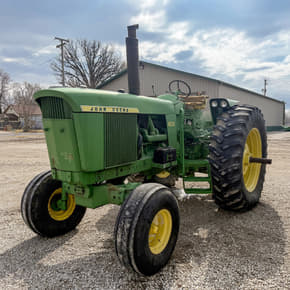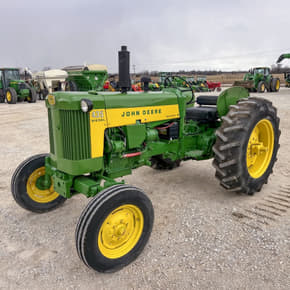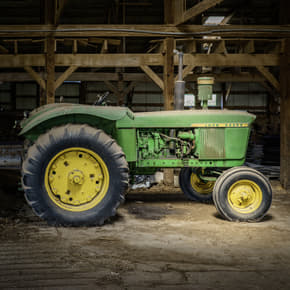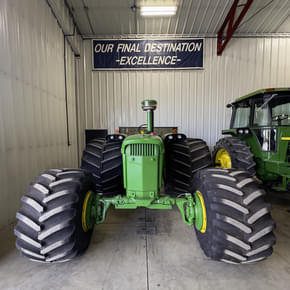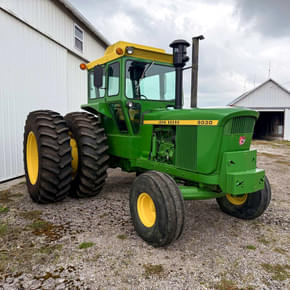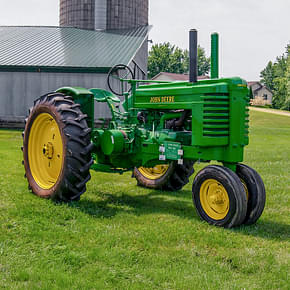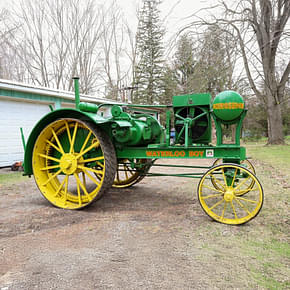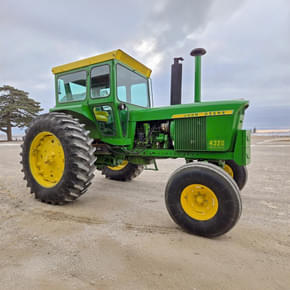
John Deere 830 (2-cylinder) listings on TZ
If you want to understand the John Deere 830, you’ve really got to start a few steps earlier—because the 830 didn’t just show up out of nowhere. It was the final chapter in a long, deliberate evolution of Deere’s big standard-tread tractors… and, whether Deere fully intended it or not, the closing act for the two-cylinder era.
That story really begins with the Model R.
John Deere’s big two-cylinders
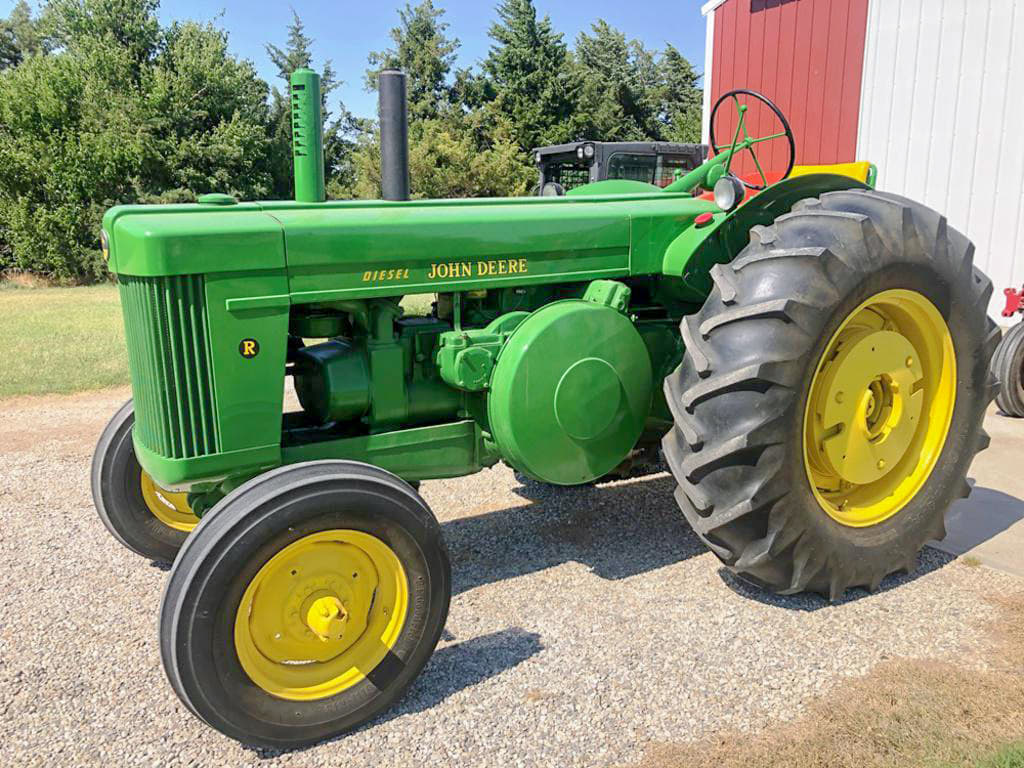
When Deere introduced the R in 1949, it was a big swing—a diesel-powered tractor at a time when that was still relatively new ground. But it wasn’t something Deere rushed to market. The R had been in development for 14 years and racked up more than 66,000 hours of testing before it ever hit a dealer lot.
One of the biggest hurdles along the way was getting that little pony motor to play nice with the big diesel—especially during the transition from gas start to diesel run. It sounds simple on paper, but it took a lot of refinement to make it reliable in the real world.
It worked.
Farmers, especially in small grain country, latched onto the R for its efficiency and lugging ability. But as the 1950s rolled on, the asks started to change. Implements got bigger. Expectations got higher. And Deere needed more tractor. So, they upped the ante.
John Deere 80
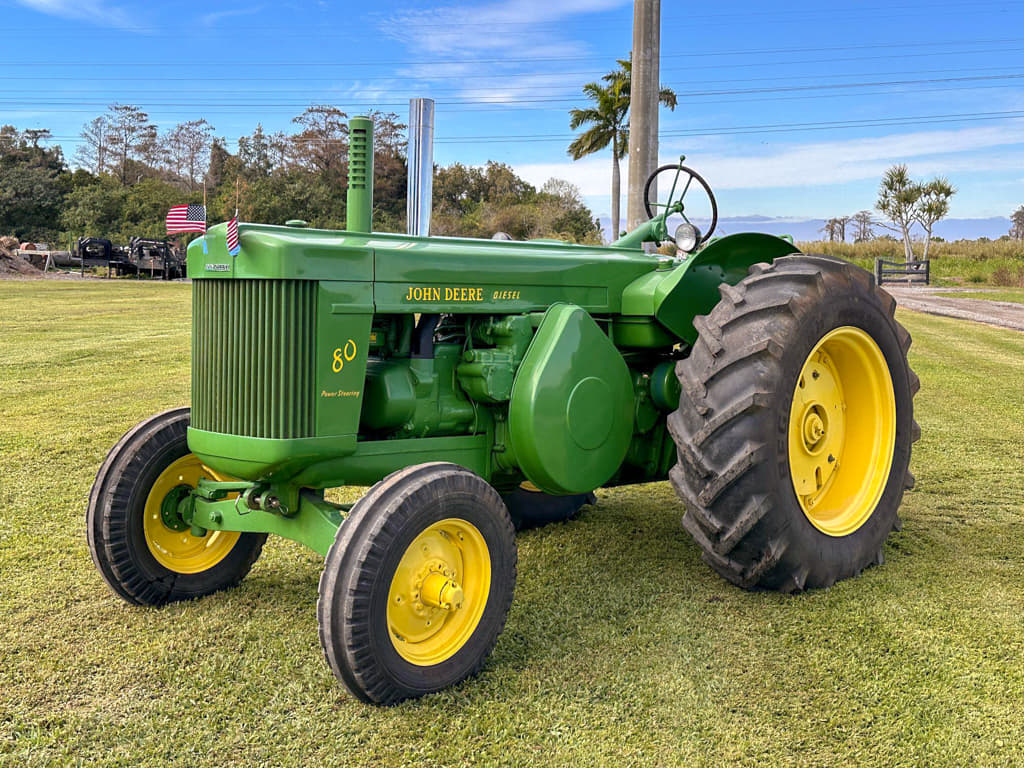
That’s where the 80 came in around 1955—and it was worth the wait. It brought a big jump in power, along with a more refined pony motor, a PTO, and a six-speed transmission that made it a much more versatile machine in the field.
It didn’t stick around long—just a couple of years, with roughly 3,500 units built between 1955 and 1956—but it firmly re-established Deere near the top end of the horsepower race.
John Deere 820
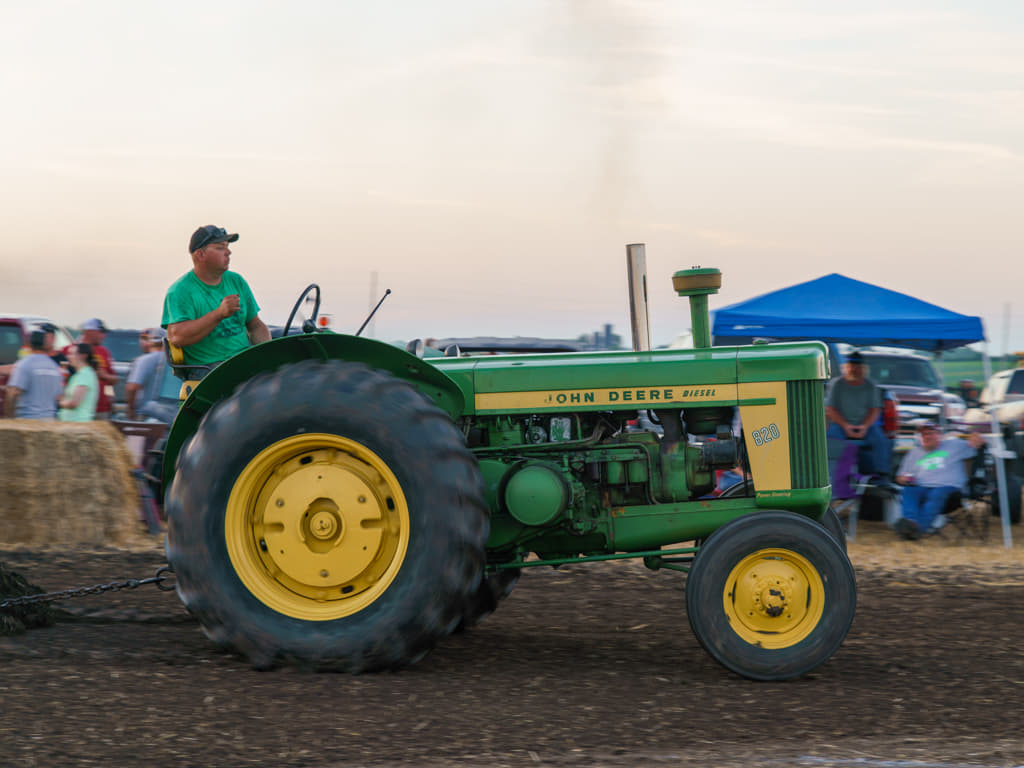
At a glance, the biggest change was cosmetic. Deere rolled out that now-iconic two-tone green and yellow paint scheme, which gave the tractor a much more modern look. But there were functional upgrades, too—most notably a bump in horsepower of about 12%, better brakes, and a renewed focus on operator comfort, including an improved seat setup.
Early 820s were pretty close to the 80 under the skin—green dash and all—but by the 1958 model year, things started to evolve. The dash turned black, and Deere began layering in more of the refinements that would carry forward.
Total production landed just shy of 7,100 units, making it a fairly successful run for a tractor in this class.
By that point, Deere had a tractor that was strong, efficient, and—maybe most importantly—consistent. It had a reputation for being overbuilt in all the right ways.
John Deere 830
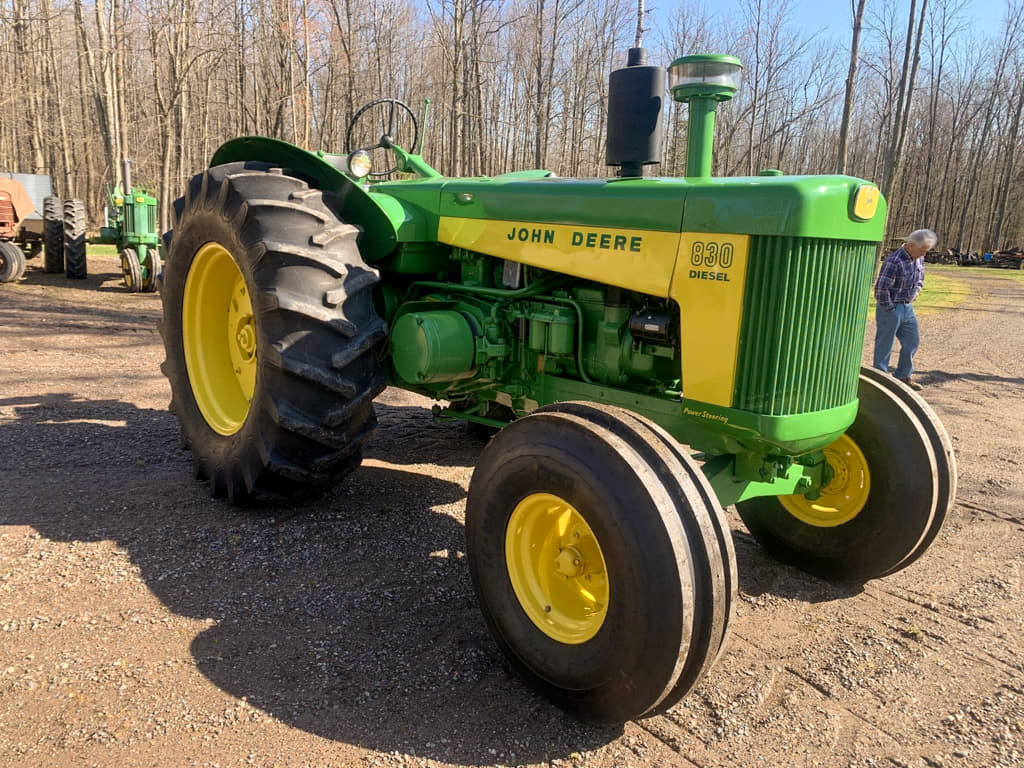
Behind the scenes, Deere was already ten toes down on something bigger: the New Generation tractors. However, they weren’t ready for prime time yet. So, they introduced the 30-Series two-cylinders to bridge that gap and buy them enough time to finish up.
A Bridge Between Eras
Introduced in 1958, the 830 was, mechanically speaking, identical to the 820. Same 471 cubic inch two-cylinder diesel turning 75-ish horsepower. Same basic architecture, too.
What changed was everything around it.
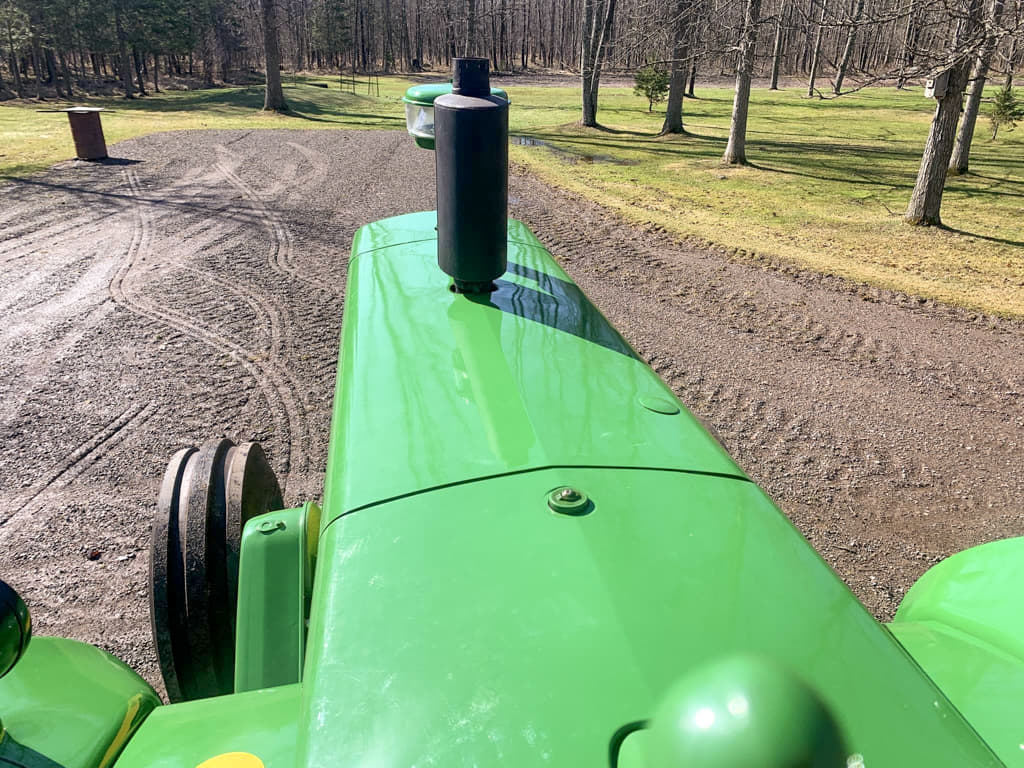
The most obvious update was styling. The 830 adopted a smoother, more modern look, thanks in part to Deere’s relationship with industrial designers Henry Dreyfuss & Associates. The squared-off, utilitarian look of earlier machines softened into something more refined—still rugged, but clearly moving toward the design language Deere would carry into the 1960s.
Refinement, Options, and Real-World Use
But it wasn’t just sheet metal.
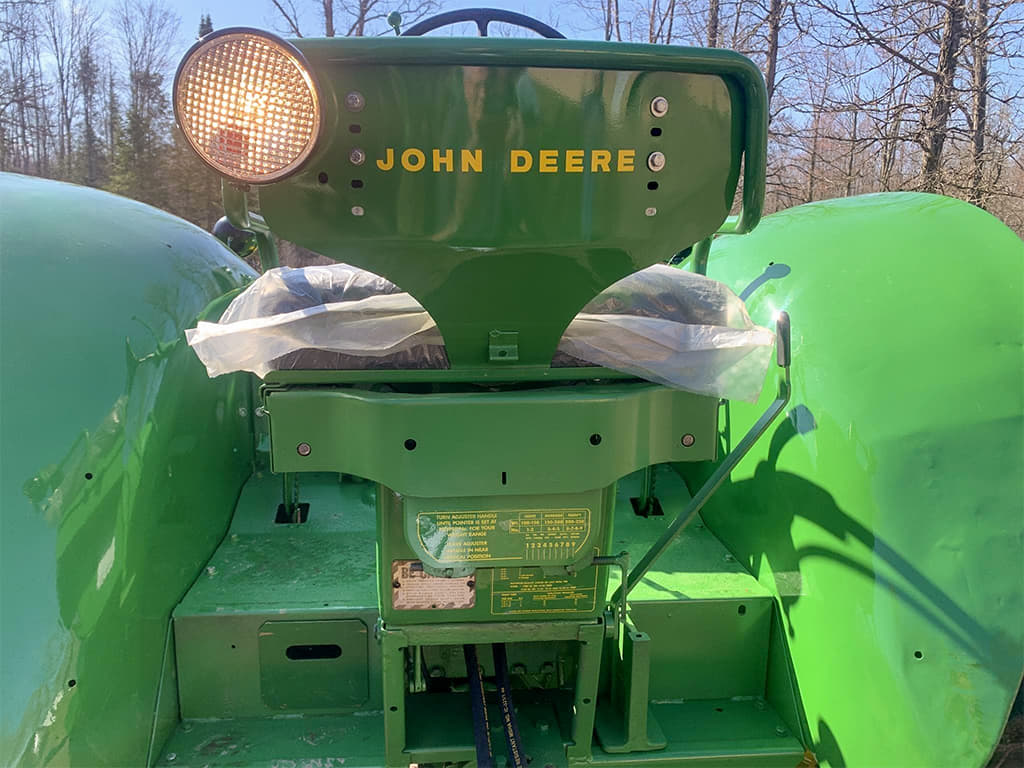
The 830 also pushed forward on operator comfort and usability in ways that really made a difference in the field. Improved power steering, a better seat, and more weather protection options all helped make long days a little more manageable. Deere even claimed you could run one all day without wearing yourself out—which might be a stretch—but it was a noticeable step forward from what came before it.
One of the more meaningful updates was the option for electric start. Earlier big Deere diesels relied on pony motors, which worked well—especially in cold weather—but weren’t exactly quick or convenient. The 830’s 24-volt electric start simplified things, though many operators in colder climates still stuck with the pony motor for reliability.
From a capability standpoint, the 830 checked all the right boxes for a flagship Deere.
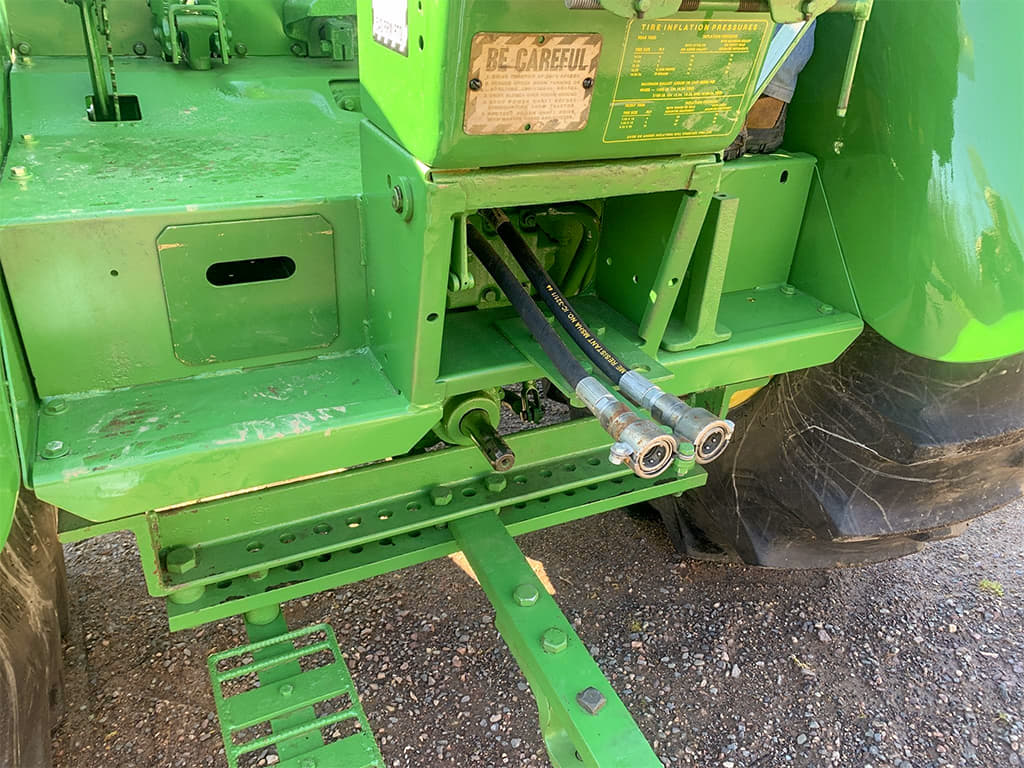
In small grain country especially, that combination of torque, efficiency, and flexibility made the 830 a natural fit—and exactly the kind of tractor farmers could rely on day in and day out.
The Last of Its Kind
Now, here’s where the 830’s story takes a turn, because for as capable as it was…it didn’t stick around long.
Production ran from August of 1958 through early 1960—less than two years. And it wasn’t because the tractor wasn’t selling. Demand was strong—strong enough that when Deere shut down to retool for the New Generation lineup, they already had a backlog built to carry them through the transition.
Total production landed at around 6,700 units, which is a solid number given the short run.
But timing is everything.
The 830 arrived right as tractor design was about to change in a big way. When the New Generation machines—like the 4010—hit the market, they brought more gears, better ergonomics, and a completely different approach to power. On paper, the 4010 matched the 830 in horsepower. But it didn’t have the same kind of low-end torque or sheer mass.
Still, it didn’t matter.
The industry was moving forward, and Deere moved with it.
That leaves the 830 in a unique spot. It wasn’t replaced because it fell short—it was replaced because the game changed.
And because of that, for a lot of folks, the 830 stands as the ultimate two-cylinder Deere—the final, most refined version of a design that had been evolving for decades.
Kent’s John Deere 830
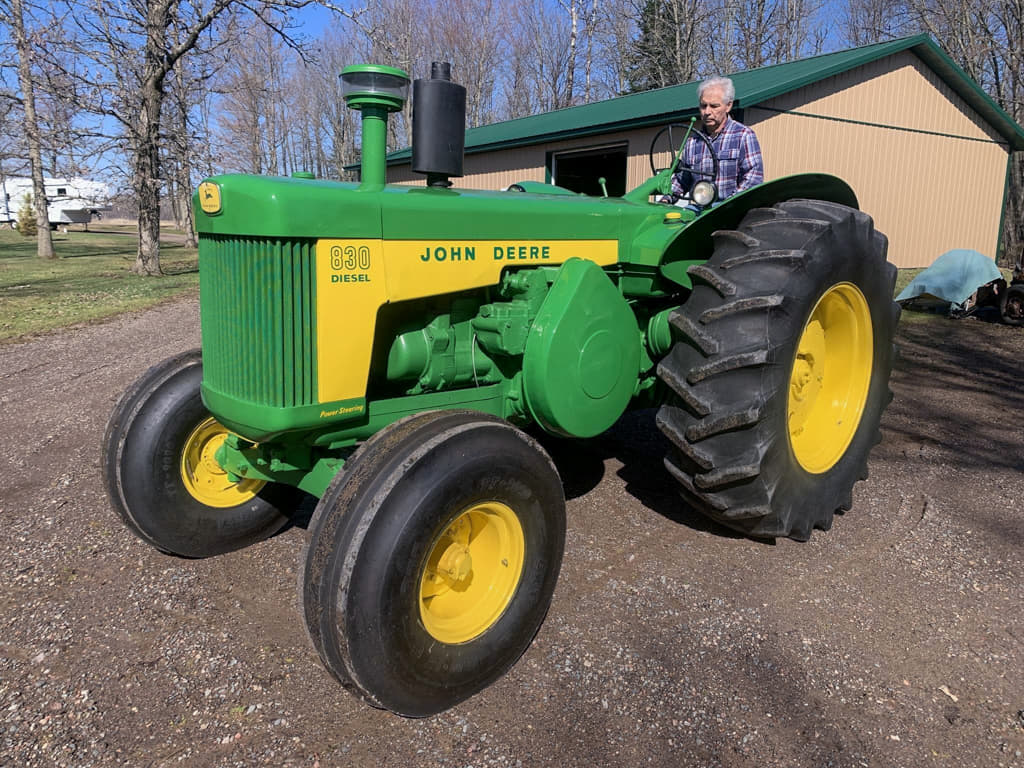
That brings us to this 830—and the guy behind it.
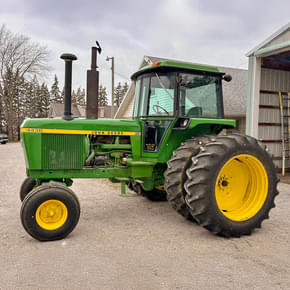
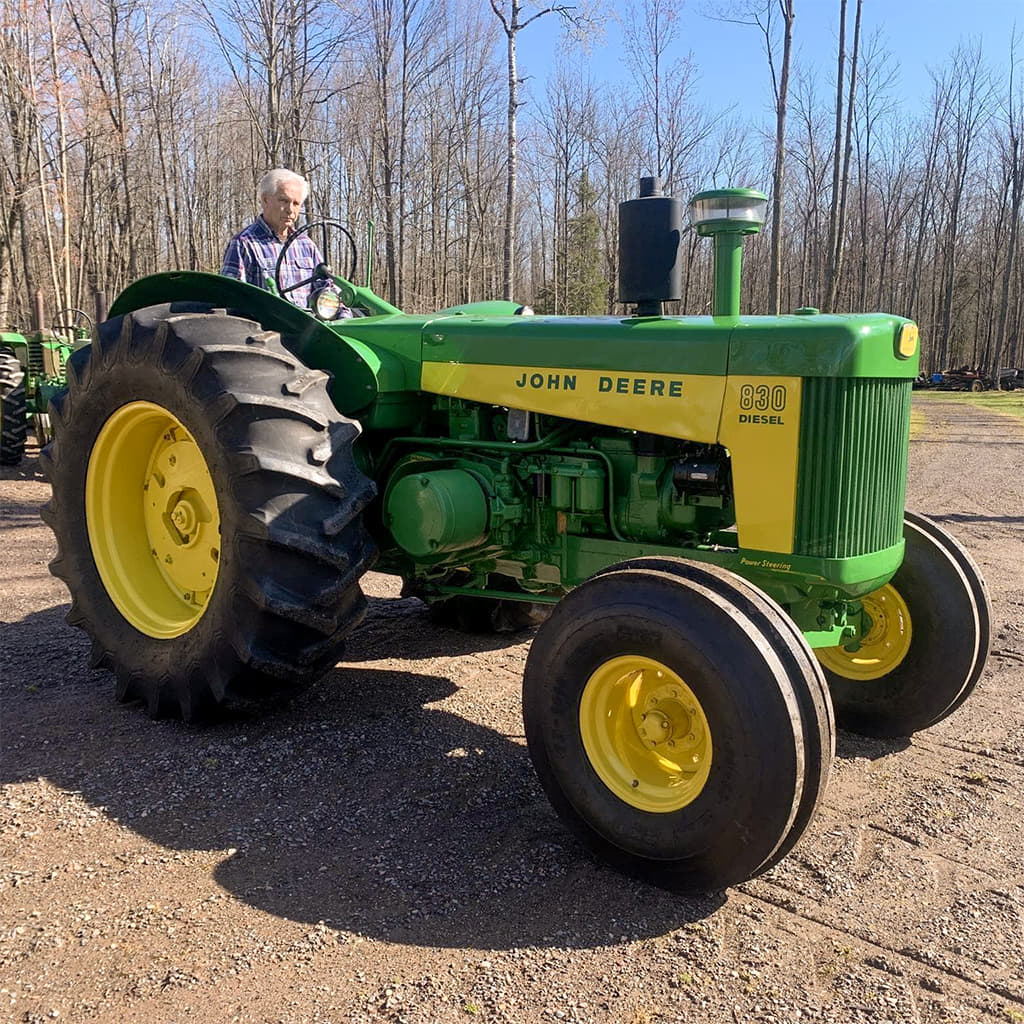
It’s sitting in Withee, Wisconsin, and it’ll sell on an RJ Stockwell auction on Wednesday, May 13th. I recently had the chance to talk with both Randy Stockwell and the owner, Kent Staab. And I’ve got to tell you, this is a beautiful machine.
Kent’s a retired truck driver, and like a lot of folks, the tractors that meant the most to him were the ones he grew up with. So over the years, he went out and found them again—mostly two-cylinder Deeres—and brought them back, one at a time. For a while, about one a year.
He’s had this 830 for 7 or 8 years, and like the others in his collection, when he decided to restore it, he didn’t cut corners.
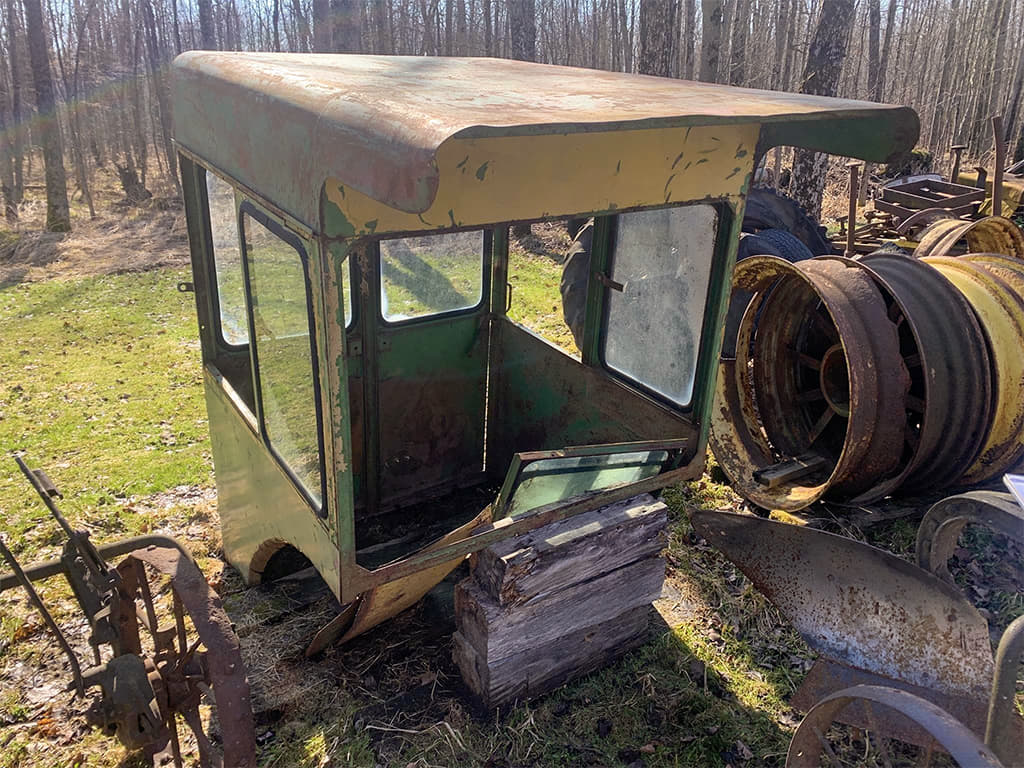
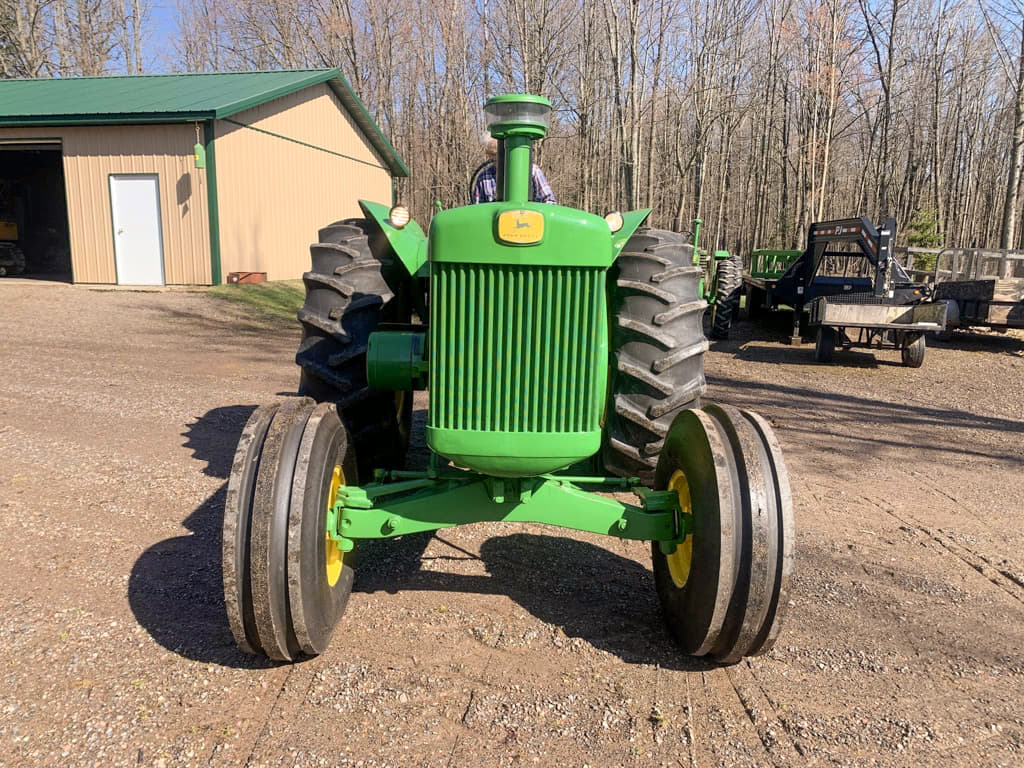
Kent’s restoration process was pretty darn comprehensive, too. If it needed rebuilt, it was rebuilt properly. If it needed cleaning, Kent cleaned it. And after the sandblasting, finish work, and re-assembly was finished, he resprayed it with paint from his local dealer and clear-coated it. New rubber all the way around, too. Big rubber in the front and shorter in the back to balance it out a little.
To me, the finished product really speaks for itself. The pony motor fires right off and kicks over to diesel without a hitch, too. It shows about 3,400 hours, which Kent believes to be accurate. Oftentimes as these transmissions get some hours on them, they develop a bit of a rumble. This one doesn’t. It runs well, drives nicely, and everything works, too.
Wrapping up…
When I was talking to Kent this morning, I picked up the distinct feeling that the joy and satisfaction was always in the work—bringing something back and seeing it run again because of your own two hands.
But, as the years go on, those parts don’t get any lighter and muscling them around the shop isn’t as easy as it once was. Kent’s feeling like it’s time to start slowing down a bit, and maybe now is the right time to let somebody else make some memories of their own with it.
Now, that said, it’s not like Kent’s sending all of ’em down the road right now. There’s still plenty of tractor rides to go on, y’know?
Anyway, take a look at the listing. It’s a beautiful tractor and it’ll be fun to see where it ends up going when the dust settles!